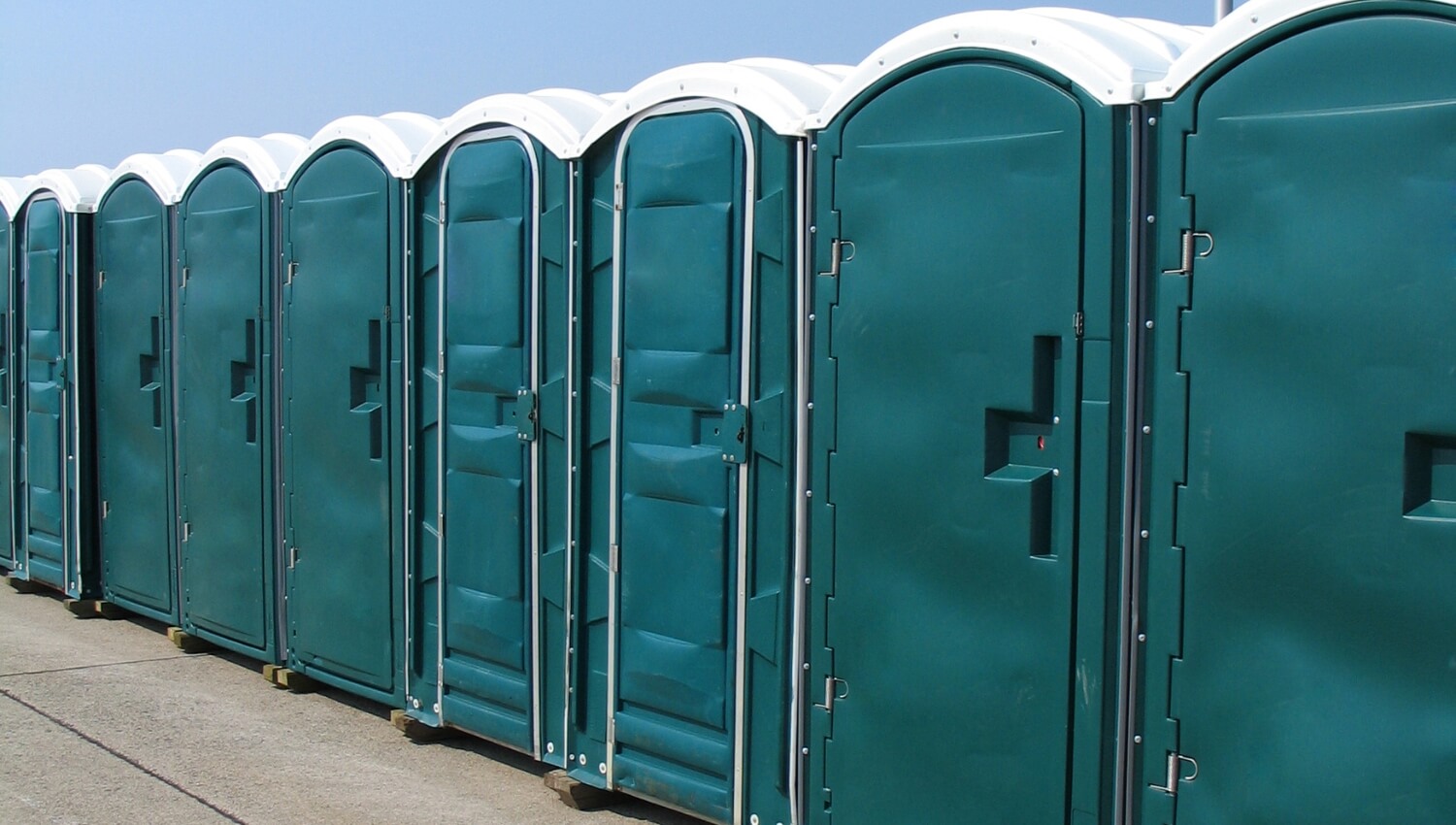
Portable sanitation on a construction site is not optional equipment. OSHA mandates it, the unit count is determined by crew size, and an inspector who finds unsanitary or insufficient facilities can issue citations that run 4 to 5 figures per violation. Getting the count right, placing units correctly, and keeping them serviced is part of running a compliant job site from day one.
Universal Waste Systems provides portable restroom units for construction sites across New Mexico, California, and Arizona. Request a quote online to confirm availability and get units scheduled for your site.
What OSHA Requires
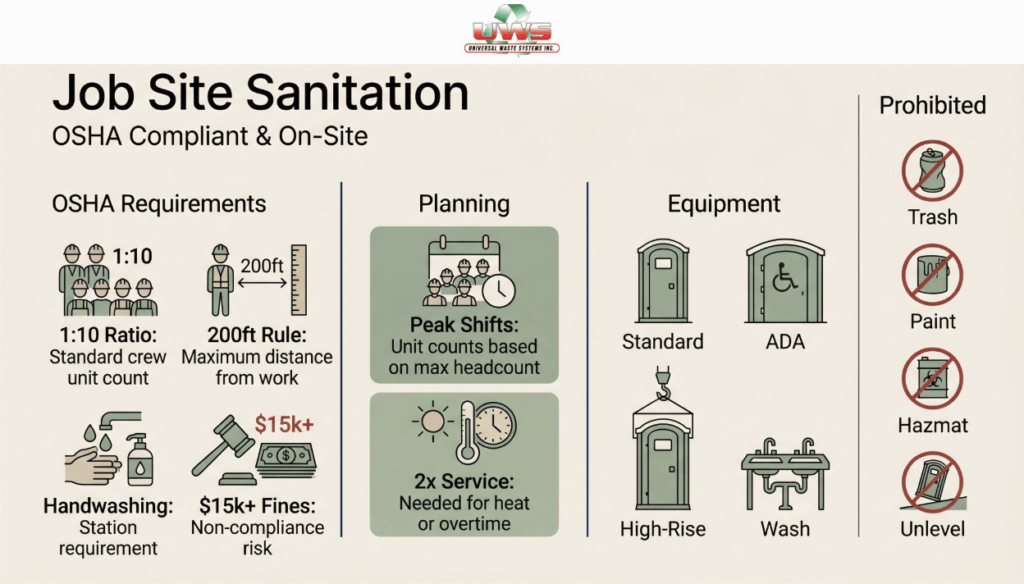
OSHA’s sanitation standard for construction, 29 CFR 1926.51, sets the minimum toilet requirements by crew size. Sites with 20 or fewer workers need at least one unit. Sites with 20 to 200 workers require one toilet and one urinal for every 40 workers. On larger sites with more than 200 workers, that ratio shifts to one toilet seat urinal per 50 workers. All calculations are based on the maximum number of workers on site at peak shift, not daily averages.
Distance is also regulated. Toilet facilities must be readily accessible to all workers, and units placed more than 200 feet from active work areas create a compliance exposure. If a worker cannot reach a unit without leaving the work zone for an extended period, the facility does not count as accessible under OSHA’s standard.
Maintenance is part of the requirement, not optional. Unsanitary units do not count toward your compliant toilet total under OSHA’s rules. A site with four units, two of which are overdue for service, is effectively a two-unit site from a compliance standpoint. Non-compliance with sanitation standards can result in fines ranging from $15,625 to $156,259 per violation depending on severity and willfulness.
How Many Units Your Site Actually Needs
OSHA sets the floor. Industry practice sets a more practical standard. The widely accepted benchmark among contractors is one unit per 10 workers for a standard 40-hour workweek. That ratio keeps units from becoming unsanitary between service visits and reduces wait times during breaks, which directly affects productivity.
Several factors push that count higher on a given site. Overtime shifts and weekend work increase usage volume without adding a corresponding service visit. Remote sites where service truck access is limited may need additional units to extend time between required pump-outs. Sites spread across a large footprint require multiple unit clusters rather than a single grouped location, which typically increases the total count. Hot weather accelerates tank fill rates and makes servicing frequency more critical.
For a crew of 20 workers on a standard 40-hour week, two units is the practical minimum. A crew of 50 working extended hours in summer conditions warrants five to six units serviced twice weekly. Confirm crew size, shift schedule, and site layout when requesting a quote so unit count and service frequency can be matched to actual site conditions.
Unit Types for Construction Sites
Standard single-unit portable toilets are appropriate for most construction applications. A standard unit includes a toilet, urinal, hand sanitizer dispenser, and a ventilation system. These units are built for heavy use and regular servicing on active job sites.
ADA-compliant units are required on any site employing workers with disabilities. These units are larger than standard models, include handrails, lower entry thresholds, and sufficient interior space for wheelchair access. Including at least one ADA unit is both a legal requirement under the Americans with Disabilities Act and a practical one for sites with diverse crews.
High-rise construction requires specialized units designed for vertical transport and placement on elevated floors. Standard units cannot be safely lifted to upper floors on a multi-story project. Confirm the project type when booking so the correct unit specification is included from the start.
Portable handwashing stations should accompany every unit cluster on a construction site. OSHA requires adequate handwashing facilities alongside toilet facilities. A station with fresh water, soap, and paper towels meets the requirement. Hand sanitizer dispensers built into the unit meet a minimum standard but are not a full substitute for a wash station on sites where workers handle materials requiring thorough cleaning before meals or breaks.
Placement and Servicing
Placement affects both compliance and productivity. Units should be within a five-minute walk of every active work zone, positioned out of the path of heavy equipment, and placed on level stable ground. Units staked into dirt surfaces resist tipping in wind. Units placed on concrete or asphalt cannot be staked and should be positioned away from high-traffic vehicle lanes.
Service frequency drives the unit count calculation as much as crew size does. Weekly servicing is the standard minimum, and it is adequate for smaller crews on a 40-hour schedule. High-traffic sites, extended shifts, and hot weather push that to twice weekly. A site running weekly service on a crew that warrants twice-weekly service will have unsanitary units before the next visit, which eliminates those units from the compliant count under OSHA’s standard.
Schedule service visits during off-peak hours when worker activity is low. Mid-week morning servicing minimizes disruption to crews and keeps units in serviceable condition through the heaviest use periods of the workweek.
Why UWS for Construction Porta Potty Rental
Universal Waste Systems is a family-owned company founded in 1986, with three generations of the Blackburn family managing operations across the Southwest. UWS has served construction sites across New Mexico, California, and Arizona for decades, with the equipment inventory and service routing to cover active job sites on a schedule that keeps units compliant throughout the project.
Getting porta potty rental right on a construction site means matching unit count, type, placement, and service frequency to the actual conditions of the job. Request a quote online to confirm availability and get your site set up before the first crew arrives.
Frequently Asked Questions
How many porta potties does OSHA require on a construction site?
OSHA’s standard under 29 CFR 1926.51 requires one unit for sites with 20 or fewer workers, one toilet and one urinal per 40 workers on sites up to 200, and one toilet seat and one urinal per 50 workers on larger sites. These counts are based on peak shift headcount, not daily averages. Industry best practice is one unit per 10 workers for a standard 40-hour workweek.
What happens if a construction site fails an OSHA sanitation inspection?
Fines for sanitation violations range from $15,625 to $156,259 per violation depending on whether the violation is classified as serious or willful. Unsanitary units that are out of service do not count toward the compliant total, meaning a site with inadequate active units can be cited even if enough units were originally ordered.
Are handwashing stations required alongside construction porta potties?
Yes. OSHA requires adequate handwashing facilities alongside toilet facilities on construction sites. Portable wash stations with fresh water, soap, and paper towels satisfy the requirement. Hand sanitizer dispensers built into standard units meet a minimum standard but are not a full substitute where workers are handling materials requiring more thorough cleaning.
Do I need ADA-compliant units on my construction site?
ADA-compliant units are required on any site where workers with disabilities are employed. These units include handrails, lower entry thresholds, and sufficient interior space for wheelchair access. At least one ADA unit should be included in any multi-unit setup as a standard practice.
How often do construction porta potties need to be serviced?
Weekly servicing is the industry minimum for standard construction sites. High-traffic sites, extended shifts, and hot weather conditions typically require twice-weekly service. Units that become unsanitary between service visits are removed from the compliant count under OSHA’s maintenance standard, so service frequency should be calibrated to actual usage, not the calendar minimum.
When should I order construction porta potties relative to the project start date?
Units should be on site before the first full workday. Ordering two to three business days in advance is sufficient for most projects. For large sites requiring multiple units or specialized equipment like high-rise units, confirming availability and scheduling delivery further in advance keeps the site compliant from day one.