The venue is set, the catering is locked, and the guest list is confirmed. Then someone asks about the restrooms. For outdoor weddings, private estates, vineyard receptions, and corporate events held away from permanent facilities, the answer matters more than most planners realize. A luxury restroom trailer rental delivers the kind of experience guests remember, with flushing toilets, running water, climate control, and finished interiors that hold up to expectations.
Universal Waste Systems provides luxury restroom trailers and upscale portable facilities for events across New Mexico, California, and Arizona. Request a quote online to confirm availability and get your trailer scheduled before the date fills.
What Sets a Luxury Restroom Trailer Apart
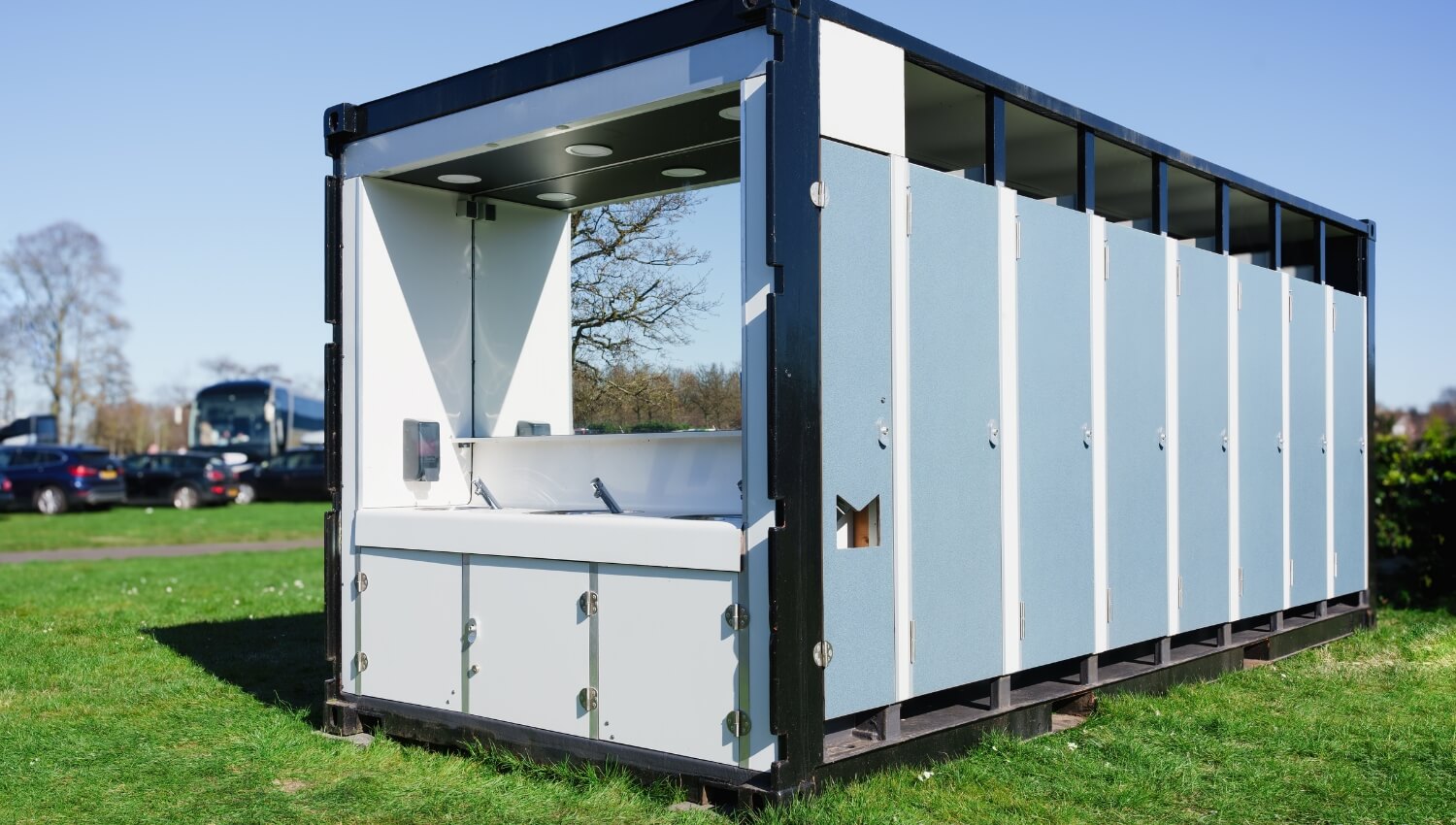
A standard portable toilet and a luxury restroom trailer share one function and almost nothing else. The separation begins with the fixtures. Luxury trailers include full flushing toilets connected to onboard holding tanks, porcelain or solid-surface sinks with hot and cold running water, interior lighting, and climate control that keeps the interior comfortable regardless of outdoor temperature. Guests walk into an environment that reads as a properly finished space.
Interior appointments typically include vanity mirrors, built-in countertops, hand soap, paper towels, and in many configurations, an onboard sound system. The trailer is towable and can be positioned at any venue a standard vehicle can access.
The practical distinction from a VIP portable toilet is scale and capacity. A single luxury trailer with multiple stalls processes significantly more guests per hour than individual units and delivers a consistent experience at every visit. For events over 100 guests where appearance and throughput both matter, a trailer is the appropriate specification.
How Many Stalls Your Event Needs
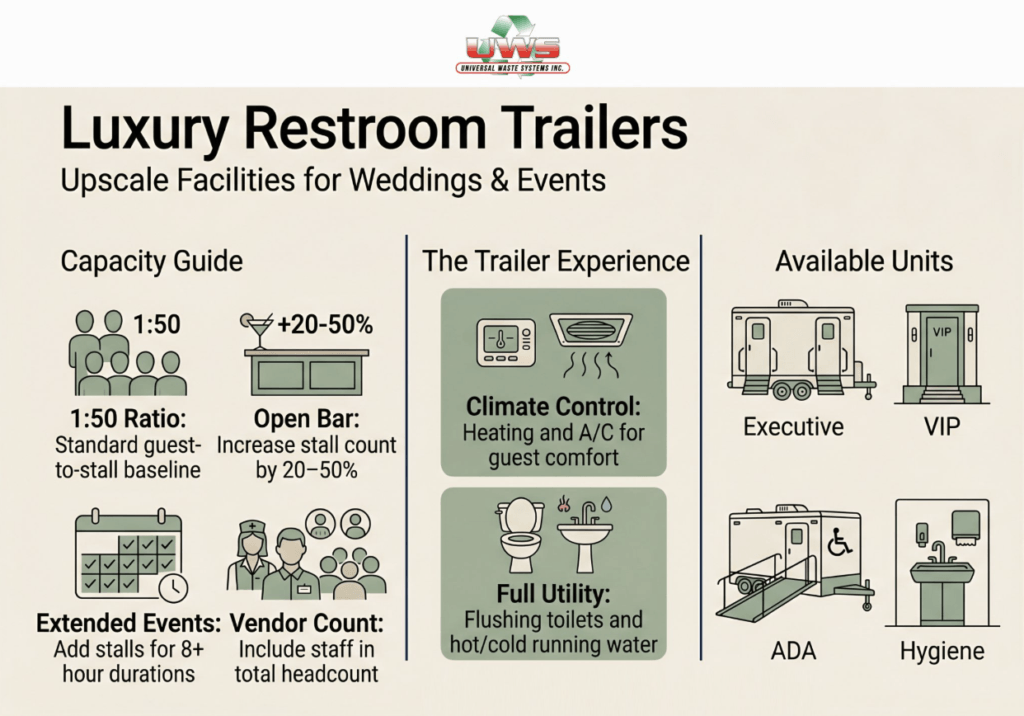
Stall count is the first planning decision and the one most likely to create problems if undercalculated. The widely used industry baseline is one stall per 50 guests for a standard four-to-six hour event. That ratio shifts upward in predictable circumstances.
Alcohol service is the most significant variable. Events with an open bar typically require a 20 to 50 percent increase in stall count above the baseline. A 200-person event with a full open bar warrants five to six stalls rather than the four the baseline suggests. Event duration pushes the number higher as well. Gatherings running eight hours or more, particularly those with meal service across multiple courses, need additional capacity to prevent wait times from stacking.
Guest demographics matter too. Events with more female guests require more stalls, and formal dress extends time per visit. Elderly guests and those with mobility limitations should factor into ADA stall planning. Vendor and staff headcount is frequently omitted from the estimate and then discovered on event day when lines form.
As a practical guide: a 150-person wedding over six hours warrants three to four stalls at minimum. A 300-person reception with an open bar calls for six to eight stalls or multiple trailer configurations. A 500-person corporate event or festival running most of a day needs ten or more stalls and should be planned with throughput per hour in mind, not just total count.
Unit Types and Configurations
Trailer-mounted restrooms are the right choice for events where guest experience and multi-stall capacity are both required. These units handle large guest counts from a single footprint and can be configured with gender-designated sides, giving women’s and men’s areas separate entry points and stall allocations sized to anticipated use patterns.
Executive portable toilets and VIP units serve a different function. They are appropriate for VIP sections, backstage access, sponsor areas, or any portion of an event where the standard unit pool would feel out of place. A single VIP unit placed near a head table or vendor staging area eliminates the need for key staff or guests to walk to the main restroom cluster during critical moments.
ADA-compliant units are a legal requirement at any public event under the Americans with Disabilities Act and a practical necessity at any private event where guests include individuals with mobility limitations. ADA-accessible stalls feature wider doorways, ramp entry, interior grab bars, and sufficient turning radius for a wheelchair. Including at least one ADA stall in every trailer configuration is standard practice for any well-planned event.
Portable handwashing stations placed adjacent to trailer clusters support hygiene standards and reduce demand on the trailer’s onboard sinks during peak periods. They are particularly important at events with food service.
Placement and Logistics
A luxury trailer positioned poorly will underperform regardless of how well it is specified. The unit needs a level, stable surface with enough clearance to tow in, unhitch, and leave positioned with entry steps accessible from the natural foot traffic path.
Event guests should be able to locate and reach the trailer without extended navigation. For larger venues with defined zones, a second smaller unit positioned near a secondary gathering area often performs better than a single high-capacity trailer placed at one end of the grounds.
Power and water access should be confirmed before booking. Luxury trailers require a standard electrical connection for climate control, lighting, and water heating. Units in remote locations without grid access need a generator, arranged at booking. Trailers with large onboard tanks can operate self-contained for single-day events when a hose connection is unavailable. Confirm both requirements when requesting a quote.
For multi-day events, service scheduling becomes a planning variable. Onboard waste tanks have finite capacity. A service visit to pump out and restock the trailer between event days keeps the unit performing at the same standard on day two that it delivered on day one.
Booking Timeline
Luxury restroom trailers have limited regional availability and book earlier than standard units. Peak season runs from late spring through early fall. Off-peak events should be booked four to six weeks out. Peak season events should be confirmed as soon as the venue contract is signed. Waiting until the month of the event creates real availability risk that a standard unit cannot solve.
Universal Waste Systems is a family-owned company founded in 1986, with three generations of the Blackburn family managing operations across the Southwest. UWS serves New Mexico, California, and Arizona with the equipment inventory and regional routing to handle event logistics reliably. Request a quote online to confirm unit availability and get your event scheduled.
Frequently Asked Questions
What is a luxury restroom trailer and how does it differ from a standard porta potty?
A luxury restroom trailer is a towable unit containing multiple private stalls with flushing toilets, running hot and cold water, interior lighting, climate control, vanity mirrors, and finished interior surfaces. Standard portable toilets use a chemical holding system with no running water and single-occupant access. Luxury trailers are appropriate for weddings, corporate events, and any gathering where the appearance and comfort of the restroom facilities is part of the event.
How many stalls do I need for my event?
The standard baseline is one stall per 50 guests for a four-to-six hour event. Alcohol service increases that requirement by 20 to 50 percent. Longer events, formal dress codes, higher proportions of female guests, and elderly attendees all push stall count higher. Staff and vendor headcount should be included in the estimate, not just the invited guest list. When in doubt, sizing up by one stall is less disruptive than managing lines on event day.
Do luxury restroom trailers require power and water hookups?
Most luxury trailers require a standard electrical connection for climate control, lighting, and water heating. Fresh water connection via a garden hose is standard for filling the onboard tank. Units operating in remote locations without grid access can run on a generator, which should be arranged at the time of booking. Confirm both power and water requirements when requesting a quote so the delivery is fully equipped for the site.
Are ADA-accessible stalls mandatory for public events?
Yes. ADA-compliant stalls should be included in any event trailer setup. They feature wider entry, ramp access, interior grab bars, and sufficient interior space for wheelchair maneuvering. Including at least one ADA stall is required at public events under the Americans with Disabilities Act and is standard practice at any private event with guests who have mobility needs.
How far in advance should I book a luxury restroom trailer?
Four to six weeks before the event is the practical minimum for off-peak dates. Peak season events, particularly outdoor weddings and festivals from late spring through early fall, should be booked as soon as the event date and venue are confirmed. Luxury trailers have limited regional inventory and commit earlier than standard units. Waiting until the month of the event creates real availability risk during high-demand periods.