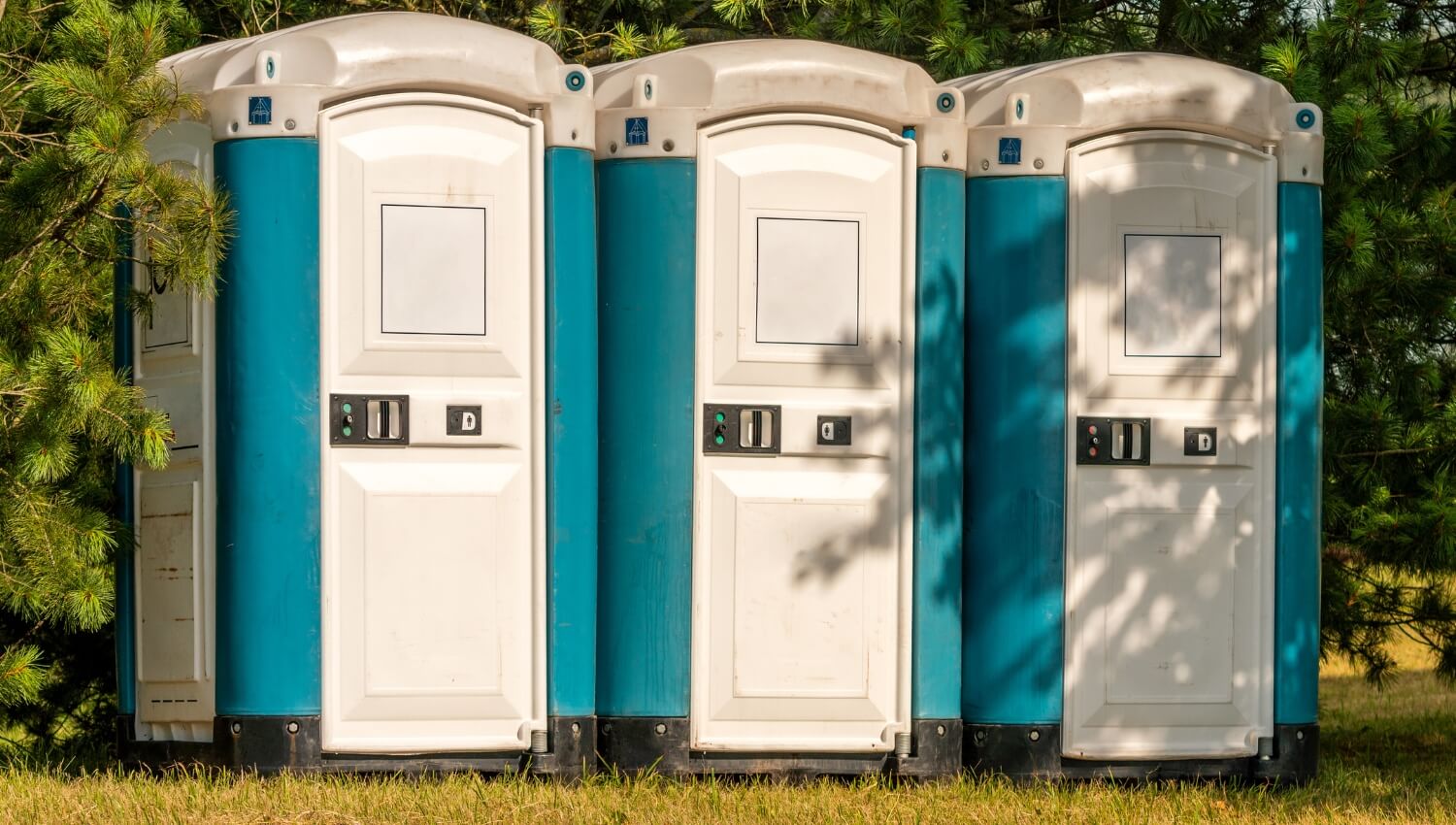
A restroom trailer rental in Phoenix comes up when the event calls for something a standard porta potty cannot deliver. Private estate weddings in Paradise Valley, corporate gatherings at outdoor venues along the Scottsdale, and ranch celebrations in the White Tank foothills all share the same problem: the venue does not have permanent restroom infrastructure sized for the guest count, and the event itself demands a facility that reflects the occasion.
Universal Waste Systems provides restroom trailers and upscale portable facilities for events across Phoenix and the broader Maricopa County area. Request a quote online to confirm availability and get your trailer scheduled.
Phoenix Event Season and When Trailers Matter Most
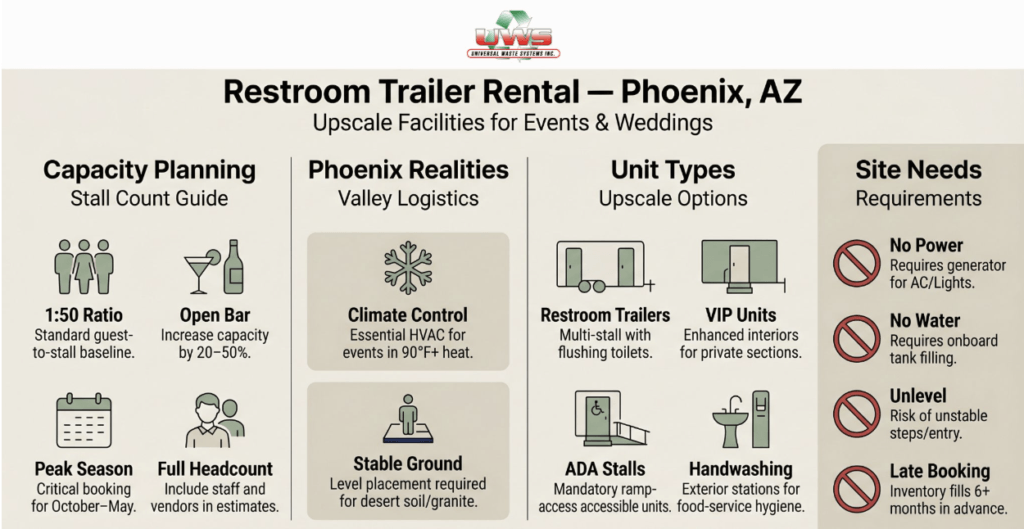
Phoenix’s event calendar concentrates heavily in the fall and spring, when temperatures make outdoor gatherings practical. October through May is peak season for outdoor weddings, private celebrations, corporate events, and festivals across the Valley. The M3F Festival, the Waste Management Phoenix Open, Cactus League Spring Training hospitality events, and hundreds of private weddings at desert estates, pecan groves, and garden venues all fall within that window.
Summer events are less common but not absent. Evening corporate gatherings, private parties with climate-controlled tent structures, and indoor-outdoor venue events still require portable sanitation through the summer months, and heat is a meaningful planning factor. Trailer climate control becomes essential rather than optional when ambient temperatures are in the 90s or above at event time.
The practical consequence for booking is that peak season inventory is finite. Trailers have limited regional availability compared to standard units and commit earlier. Fall and spring weddings and corporate events should be booked as soon as the date and venue are confirmed, not in the weeks leading up to the event.
Stall Count and Guest Count
The industry baseline for restroom planning is one stall per 50 guests for a standard four-to-six hour event without alcohol. That ratio shifts in both directions depending on event specifics.
Alcohol service is the single largest variable. Events with an open bar typically require 20 to 50 percent more stall capacity than the baseline. A 200-person wedding reception with an open bar warrants five to six stalls rather than the four the baseline suggests. Event duration compounds the effect. A ceremony-plus-reception running six to eight hours generates significantly more usage than a four-hour cocktail reception.
Guest demographics matter too. Formal dress and evening wear extend time per visit. Events with a higher proportion of female guests require more stalls. Staff and vendor headcount is frequently left out of the estimate and discovered on event day when lines form.
As a practical guide: a 150-person wedding over six hours warrants three to four stalls at minimum. A 300-person reception with an open bar calls for six to eight stalls or multiple trailer configurations. Confirm guest count, event duration, and whether alcohol is being served when requesting a quote.
Unit Types Available in Phoenix
Trailer-mounted restrooms are the right choice when guest experience and multi-stall throughput are both required. These units handle large guest counts from a single footprint and can be configured with gender-designated sides sized to anticipated use patterns.
Executive portable toilets and VIP units serve a different function. They are appropriate for backstage access, sponsor areas, VIP sections, or any portion of an event where a standard unit would feel out of place. A single VIP unit placed near a head table or vendor staging area keeps key staff and guests from walking to the main restroom cluster during critical moments.
ADA-compliant units are required at any public event under the Americans with Disabilities Act and are standard practice at any private event with guests who have mobility needs. ADA stalls feature wider doorways, ramp entry, interior grab bars, and sufficient turning radius for a wheelchair.
Portable handwashing stations placed adjacent to trailer clusters support hygiene standards and reduce demand on the trailer’s onboard sinks during peak periods. They are particularly important at events with food service.
Placement and Logistics
A restroom trailer needs a level, stable surface with enough clearance to tow in, unhitch, and position with entry steps accessible from the natural foot traffic path. Desert soil and decomposed granite are common at Phoenix-area outdoor venues and can shift under a loaded trailer. Confirming the placement surface when booking gives the delivery crew the information needed to position the unit correctly on arrival.
For larger venues with multiple event zones, a secondary smaller unit positioned near a secondary gathering area often performs better than a single trailer placed at one end of the property. This is worth discussing during the planning process, particularly for multi-area estate events or venues with a separate ceremony and reception space.
Power and water access should be confirmed before the delivery date. Trailers need a standard electrical connection and either a fresh water hookup or an adequate onboard tank for the duration. For remote desert locations without grid access, a generator can be arranged at the time of booking.
Why UWS for Restroom Trailer Rental in Phoenix
Universal Waste Systems is a family-owned company founded in 1986, with three generations of the Blackburn family managing operations across the Southwest. UWS serves Maricopa and Pinal County with the equipment inventory and regional routing to deliver trailers on schedule and service them when the event requires it.
Phoenix-area events range from intimate private weddings at desert estates to large corporate gatherings at outdoor venues across the Valley. UWS carries the full unit mix, including trailers, VIP units, ADA portables, and handwashing stations, to put together the right setup regardless of the event format. Request a quote online to confirm availability and get your Phoenix event scheduled.
Frequently Asked Questions
What is a restroom trailer and how does it differ from a standard porta potty?
A restroom trailer is a multi-stall facility with flushing toilets, running water, interior lighting, climate control, and finished interior surfaces. Standard portable toilets use a chemical holding system with single-occupant access and no running water. For weddings, corporate events, and any gathering where the restroom experience reflects on the occasion, a trailer is the appropriate choice.
How many stalls do I need for my Phoenix event?
The baseline is one stall per 50 guests for a four-to-six hour event without alcohol. Open bar service increases that requirement by 20 to 50 percent. Longer events, formal dress codes, and events with higher proportions of female guests all push stall count higher. Staff and vendor headcount should be included in the estimate. When in doubt, sizing up by one stall is less disruptive than managing lines on event day.
Does Phoenix heat affect restroom trailer planning?
Yes. Climate control in the trailer becomes essential rather than optional for any event where ambient temperatures are in the 90s or above at event time. The trailer’s electrical connection powers the HVAC system, so confirming power access at the venue is a required planning step. For evening fall and spring events in Phoenix, climate control is less critical but still worth confirming.
How far in advance should I book a restroom trailer in Phoenix?
Peak season runs from October through May, when outdoor weddings and corporate events concentrate across the Valley. Trailers have limited regional inventory and book significantly earlier than standard units. Booking as soon as the event date and venue are confirmed is the reliable approach. Waiting until the month of a peak-season event creates real availability risk.
Are ADA-accessible stalls available in trailer configurations?
Yes. ADA-compliant units are available and should be included in any event setup. They feature wider entry, ramp access, interior grab bars, and sufficient interior space for wheelchair maneuvering. Including at least one ADA stall is required at public events under the Americans with Disabilities Act and is standard practice at any private event with guests who have mobility needs.