Coolidge sits 56 miles southeast of Phoenix in Pinal County, home to 13,218 residents as of 2025. This agricultural community turned manufacturing hub hosts major food processing operations, cotton gins, and recently added automotive parts manufacturing facilities. The city’s proximity to Casa Grande’s explosive industrial growth creates spillover development driving steady construction activity and renovation projects.
Universal Waste Systems provides dumpster rental service throughout Coolidge for residential cleanouts, commercial construction, and ongoing business operations. We deliver waste bins sized appropriately for your project scope—from single-room renovations to multi-phase commercial buildouts—with straightforward pricing and reliable service.
Understanding Coolidge’s Waste Management Needs
Coolidge’s character differs noticeably from neighboring Casa Grande or Phoenix suburbs. Older residential neighborhoods feature homes built in the 1940s-1960s requiring significant renovation work as new buyers update outdated kitchens, bathrooms, and electrical systems. Commercial properties along Arizona Boulevard and Main Street undergo periodic updates as businesses change hands or expand operations.
Agricultural operations surrounding Coolidge generate unique waste management requirements. Equipment sheds, barn demolitions, and property clearing projects produce mixed waste streams including metal components, wooden structures, and general debris. These projects don’t fit standard residential waste patterns—they need flexible rental periods and containers sized for bulky, irregular materials.
Manufacturing facilities expanding in Coolidge’s industrial parks require ongoing waste management solutions. Production waste, packaging materials, and periodic equipment upgrades generate consistent disposal needs. Companies need reliable service providers who understand industrial operations and can coordinate around production schedules rather than forcing businesses to adapt to rigid pickup windows.
Residential Dumpster Rentals That Actually Make Sense
Estate Cleanouts and Property Clearing
Coolidge’s aging housing stock means estate settlements happen regularly. Adult children inheriting parents’ long-occupied homes face decades of accumulated belongings, outdated furniture, and items requiring disposal. A 20-yard container handles most single-family estate cleanouts unless the property shows hoarding tendencies or extensive garage/shed accumulation requiring 30-yard capacity.
These projects rarely follow predictable timelines. Family members coordinating from different cities, decisions about what to keep versus discard, and emotional challenges of sorting through relatives’ possessions all extend clearing timelines beyond initial estimates. We provide reasonable rental periods with daily extension rates that don’t penalize the reality of how estate work actually progresses.
Home Renovations Updating Older Properties
Kitchen renovations in Coolidge’s mid-century homes generate substantial waste. Original metal cabinets, laminate countertops, old appliances, vinyl flooring, and outdated plumbing fixtures add up quickly. Most kitchen projects fit 20-yard containers comfortably. Whole-house renovations tackling multiple rooms simultaneously need 30-yard capacity to avoid mid-project container swaps interrupting workflow.
Bathroom updates removing old tile, cast iron tubs, pedestal sinks, and water-damaged subflooring typically fit 10-yard containers for single bathrooms. Properties updating two or three bathrooms during comprehensive renovation projects should start with 20-yard capacity rather than gambling on undersized containers.
Flooring replacement throughout entire homes generates more volume than most homeowners expect. Removing carpet, padding, tack strips, and old vinyl or linoleum from a 1,500 square foot home fills a 20-yard container. Larger homes or properties with multiple flooring layers requiring removal may need 30-yard capacity.
Yard Waste and Landscape Projects
Coolidge’s desert climate doesn’t prevent significant landscape waste generation. Property owners removing dead or unwanted trees, clearing overgrown mesquite, or eliminating old decorative rock and landscape fabric need dedicated disposal capacity. A 10-yard container handles most residential yard cleanup projects. Extensive tree removal or whole-property landscape renovations may require 20-yard capacity for bulky organic materials.
Commercial and Construction Applications
Retail and Office Tenant Improvements
Commercial spaces along Arizona Boulevard experience regular tenant turnover. New businesses customizing spaces to their specific requirements generate concentrated debris—demolished walls, removed fixtures, old flooring, and discarded shelving units.
These buildouts typically need 20-yard containers with flexible rental periods accommodating construction delays that inevitably arise during permit inspections, unexpected structural issues, or supply chain problems affecting material deliveries.
Restaurant spaces undergoing conversion to new dining concepts produce particularly complex waste streams. Commercial kitchen equipment, bar fixtures, dining furniture, and extensive demolition waste from reconfigured floor plans often fill 30-yard containers. Projects rarely finish on originally estimated timelines, so rental flexibility matters considerably more than initial daily rates.
Manufacturing Facility Expansions
Food processing operations and automotive parts manufacturers expanding in Coolidge generate industrial-scale waste during construction phases. Foundation work, steel structure installation, and interior buildouts for production areas require 40-yard containers exchanged frequently as different construction phases progress.
We coordinate delivery and pickup timing around active construction schedules, understanding that dumpster placement affects equipment access and material staging areas.
Operational waste from manufacturing facilities requires scheduled ongoing service. Monthly or quarterly pickups handle accumulated packaging materials, defective products, equipment maintenance waste, and general facility debris. Establishing consistent service schedules helps facilities budget accurately and ensures waste never accumulates to levels affecting production floor organization or safety compliance.
Agricultural Property Applications
Coolidge’s agricultural heritage means property owners frequently tackle barn demolitions, equipment shed removal, and farm structure cleanouts. These projects generate mixed material streams—corrugated metal roofing, wooden structural members, concrete foundations, and accumulated equipment parts and debris from decades of storage.
A 30-yard container handles most small barn or equipment shed demolitions. Larger structures or those with significant concrete foundation removal may require 40-yard capacity or multiple container deployments as demolition progresses through different phases. Rural property locations sometimes present access challenges—narrow driveways, soft soil conditions, or overhead obstructions requiring careful delivery planning.
Orchard removal projects removing dead or unproductive trees generate substantial organic waste volumes. While we can’t accept hazardous agricultural chemicals, containers accommodate tree debris, removed irrigation systems, and associated landscape materials from agricultural property conversions to residential or commercial development.
Size Selection Without Guesswork
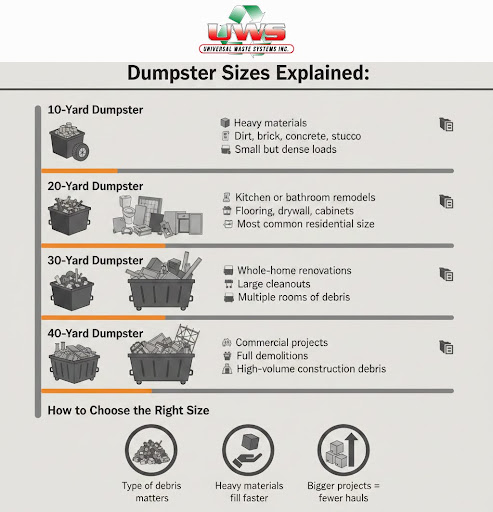
Choosing appropriate container sizes prevents unnecessary costs from oversized rentals or mid-project exchanges from undersized capacity. Here’s practical guidance based on actual project requirements:
10-yard containers suit single-room cleanouts, small bathroom renovations, garage cleanouts, and minor landscape projects. This size works well for projects generating 3-4 pickup truck loads of waste.
20-yard containers handle full kitchen renovations, estate cleanouts, flooring replacement projects, small deck removals, and medium-sized landscape renovations. Most residential projects fall into this capacity range.
30-yard containers accommodate whole-house renovation projects, large estate cleanouts, significant demolition work, and major landscape overhauls. Commercial tenant improvements typically require this capacity.
40-yard containers serve new construction projects, commercial demolitions, large-scale cleanouts, and industrial applications. These containers suit projects generating waste continuously over extended periods requiring regular exchanges.
When uncertain about appropriate sizing, describing your project scope during scheduling helps us recommend suitable capacity. We’d rather size containers correctly initially than deal with rushed emergency deliveries when undersized containers fill prematurely mid-project.
Pricing Structure and Rental Terms
Our pricing includes delivery, pickup, disposal fees, and standard 14-day rental periods. Weight limits vary by container size—exceeding limits incurs additional charges based on tonnage over the included threshold. We discuss weight limits and potential overage costs during initial quotes so you understand complete pricing before committing.
Rental extensions beyond 14 days cost reasonable daily rates. We don’t inflate extension fees to penalize realistic project timelines—construction and renovation work rarely finishes exactly when initially planned.
Prohibited materials include hazardous waste, chemicals, paint, tires, batteries, and electronics. These items require specialized disposal through appropriate facilities. We can provide guidance on proper disposal options for materials we cannot accept in standard containers.
Delivery Throughout Coolidge’s Service Area
We deliver throughout Coolidge’s city limits and surrounding Pinal County areas including residential neighborhoods, commercial districts, industrial parks, and rural properties. Delivery requires adequate access for our trucks—typically 14 feet of overhead clearance, 10 feet of width, and firm, level ground supporting container weight when loaded.
Property owners should identify suitable placement locations before delivery. Driveways work well when containers won’t block necessary vehicle access. Street placement may require city permits depending on location and duration. We can advise on permit requirements during scheduling.
Container placement near overhead power lines, low-hanging tree branches, or underground utilities requires careful coordination. Identifying potential conflicts before delivery prevents placement problems requiring expensive repositioning or delayed projects.
Why Local Service Matters in Coolidge
Phoenix-based waste management companies often treat Coolidge as marginal service territory. Orders accumulate until enough requests justify sending trucks 56 miles southeast. You’re waiting on their route efficiency rather than receiving service based on your project needs.
We operate in Pinal County with regular Coolidge service routes. Requests receive prompt attention without waiting for sufficient order volumes to justify dispatch. This operational difference translates directly into faster delivery times and more responsive customer service when project conditions change or problems arise requiring immediate attention.
Universal Waste Systems provides reliable dumpster rental service throughout Coolidge for residential, commercial, and agricultural applications. Contact us for straightforward pricing and containers sized appropriately for your project requirements.
Frequently Asked Questions
How much weight is included in rental pricing?
Weight limits vary by container size. We specify tonnage and overage rates during initial quotes so you understand complete costs before scheduling delivery.
Can you deliver to rural properties outside Coolidge city limits?
Yes, we serve rural Pinal County areas surrounding Coolidge. Delivery to remote properties may require additional coordination regarding access conditions and placement locations.
What’s the rental period and how do extensions work?
Standard rentals include 14 days. Extensions cost reasonable daily rates calculated from the 15th day forward. We don’t penalize realistic project timelines with excessive extension fees.
Do you require permits for street placement?
Permit requirements depend on specific street locations and placement duration. We can advise on local requirements during scheduling and help coordinate permit applications if necessary.
What happens if the container gets too full?
Containers must remain below the top edge for safe transport. Overfilled containers cannot be picked up until excess material is removed to safe levels. Proper size selection prevents overfilling issues.